

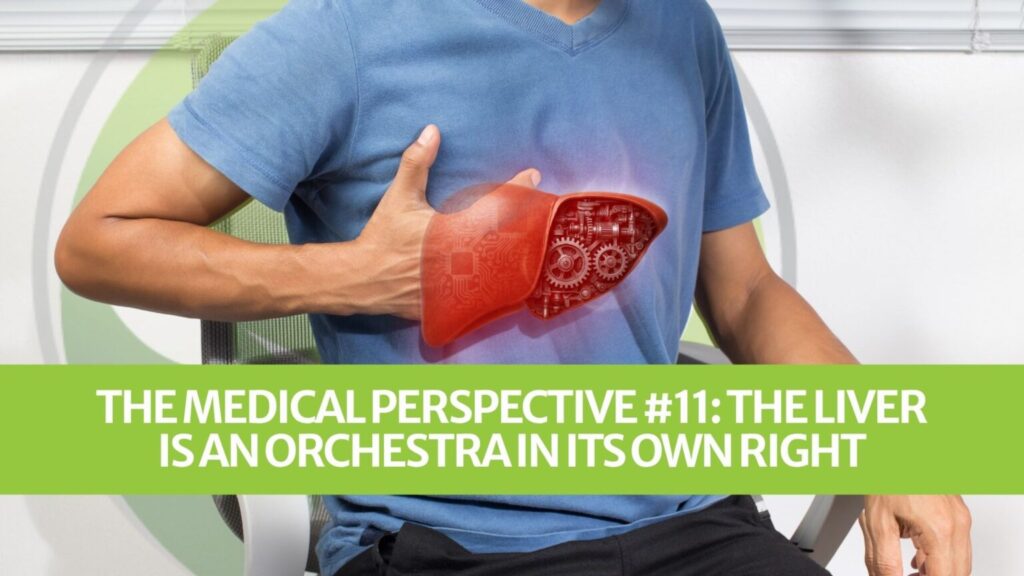
Fats, Lipids, Cholesterol, Bile, Detox and Energy Management
In my last blog, I spoke about the kidneys – the masters of fine-tuning water, minerals, and pH. Today, we move on to another remarkable organ – the liver: the great manager of fats, cholesterol, bile, detox and energy management.
Where I grew up in South Africa, Zulu was the most commonly spoken language in our area. In Zulu, the word for liver and the word for courage is the same: “Isibindi.”
It means liver, but it also means grit, bravery or audacity.
So, someone with courage is literally described as someone with “a lot of liver.”
And when you think about what the liver does every day, that idea makes perfect sense. Our liver needs courage; everything we eat and drink is absorbed through the stomach and intestines and then sent to the liver. The liver inspects what comes in and decides what to keep, what to store, what to transform, and what to send out again.
Just imagine what passes through it every day: food additives, colourants, flavourings, preservatives, pesticides, alcohol, medications, recreational drugs.
And that is only part of the job. The liver also decides how our body handles energy – are we burning fuel, or are we saving it for later?
It must manage bile, fats, cholesterol, sugars, and dozens of other substances, all while keeping the whole system balanced. That takes courage.
The Liver is an Orchestra within the Orchestra: Three Key Players
So today, imagine we are walking into a concert hall somewhere in Africa. Voices warming up, drums in the background, the hum of musicians getting ready.
The liver is not a single performer. It is an orchestra within the orchestra.
And three principal players help keep the rhythm of metabolism.
Our principal players today are:
PPARs — the energy managers
LXRs — the cholesterol moderators
FXR — the guardian of bile
Take your seats. The performance is about to begin.
The Fuel Managers: PPAR
The first players belong to the PPAR family.
You can think of the PPAR family as the energy managers of the liver. Their job is simple, but incredibly important: Should we burn fuel… or store it? When fatty acids appear in the bloodstream, PPARs sense them immediately. They help the liver decide how to respond.
PPARα — The Fasting Specialist
When you have not eaten for a while, your body begins to switch into fasting mode. This is where PPAR alpha steps in. It tells the liver: “Start burning fat.”
The liver begins converting fats into energy. Some of that energy becomes ketones, which the brain and muscles can use when glucose becomes scarce. If you are reading up on health and diet trends, this is what happens when you do a “ketogenic diet”, as covered here.
Without this signal, fats start to accumulate inside of the liver. You may have heard about a “fatty liver.” When the liver’s signal to begin this process is functioning well, the liver smoothly shifts into fat-burning mode, keeping the energy supply flowing.
PPARγ — The Storage Manager
Another member of the family, PPAR gamma, focuses on where fats should be stored. Fat itself is not the enemy. The problem begins when fat ends up in the wrong place.
PPAR gamma helps store fat safely in fat tissue, instead of letting it accumulate in organs like the liver or muscles. When this system works well, insulin works better, too. When it does not, the result can be the familiar cluster of modern problems: fatty liver, high blood sugar, high blood pressure, and unhealthy cholesterol levels.
PPARδ — The Endurance Coach
The third member, PPAR delta, acts more like a fitness trainer for the body. It helps cells become better at using fat as fuel, especially during longer periods of activity. It also helps calm excessive inflammation. Think of PPARδ as the quiet coach in the background saying: “Keep going. Use the fuel you already have.”
Next, we meet another pair of harmonisers: the LXRs.
Cholesterol often gets a bad reputation, but the truth is, we couldn’t live without it.
For instance, cholesterol:
-
stabilizes our cell membranes,
-
helps produce hormones, and
-
helps create bile acids.
In fact, much of the insulation around brain cells (myelin) is built from cholesterol. The problem is not cholesterol itself. The problem is too much in the wrong place.
This is where the LXRs step in. They act like cholesterol sensors. When cholesterol levels start rising, they activate systems that move cholesterol out of cells and back into circulation, where it can be carried away by HDL particles – the so-called “good cholesterol.” In other words, LXRs help keep cholesterol from taking over the orchestra.
But biology loves trade-offs.
When LXRs push cholesterol out, they can also quietly encourage the liver to make a little more fat. It is not perfect, but it keeps the overall balance. And in the liver, balance often means choosing the least risky compromise.
The Bile Guardian: The Farnesoid X Receptor (FXR)
Our final musician today is the FXR. If PPARs manage fuel, and LXRs manage cholesterol, the FXR watches over bile production. Bile is one of the liver’s most powerful tools. It helps break down fats so we can absorb them. Without bile, a fatty meal would pass straight through us. But bile is also strong enough to damage cells if too much builds up. So, the body needs careful supervision.
The FXR acts like a bile “volume controller.” When bile levels rise, the FXR tells the liver: “Slow down production.” When levels fall, the system allows production to increase again.
The FXR also communicates with the intestines, creating a feedback loop that keeps bile circulating smoothly between liver and gut.
Too little FXR activity, and bile acids can become toxic. Too much restriction, and digestion suffers.
Balance is Everything
Once again, balance is everything. The remarkable thing about the liver players, is that these musicians do not play alone. They constantly listen to one another.
When PPARs increase fat burning, cholesterol availability changes. When cholesterol changes, LXRs respond. When bile acids rise, FXR adjusts the system again. Everything is connected.
Fat metabolism affects cholesterol. Cholesterol affects bile acids. Bile acids send signals back to the liver. It is not a collection of solo performances. It is a living orchestra.
When our musicians stay in rhythm, the liver maintains harmony:
-
Fats are burned when needed.
-
Cholesterol is kept in check.
-
Bile flows safely.
-
Energy is balanced.
But when the rhythm breaks down, the music changes.
-
Fat begins to accumulate in the liver.
-
Cholesterol balance shifts.
-
Insulin resistance appears.
-
Inflammation follows.
The orchestra does not stop playing. But the harmony is lost. And that is when metabolism begins to struggle.
NANO SOMA® and the Harmony of the Liver
NANO SOMA® has enough “isibindi” to prompt your nuclear receptors to help harmonise your “isibindi”.*
Nuclear receptors such as the PPARs, LXRs and the FXR are part of the body’s internal communication network. They listen constantly to signals from nutrients, hormones and metabolites, adjusting how the liver manages energy, fats, and bile.
In the presence of NANO SOMA, these receptor pathways are gently prompted, encouraging the body’s own regulatory systems to maintain their natural balance.* Rather than forcing a change, the body’s internal orchestra is supported* so that the musicians can remain in rhythm with one another.
When the signals between these receptors stay coordinated, the liver can continue performing its daily work with remarkable precision – balancing fuel, moderating cholesterol movement, and guiding bile circulation.
In that sense, NANO SOMA does not attempt to play the instruments itself. It simply helps the orchestra stay in tune.*
Are You Ready To See What It Can Do For You?
Tap the button below and discover how you can!
*These statements have not been evaluated by the US Food and Drug Administration. This product is not intended to diagnose or prescribe for any medical condition, nor to prevent, treat, mitigate, or cure such condition(s). If you have any illness or medical condition, consult your healthcare provider.